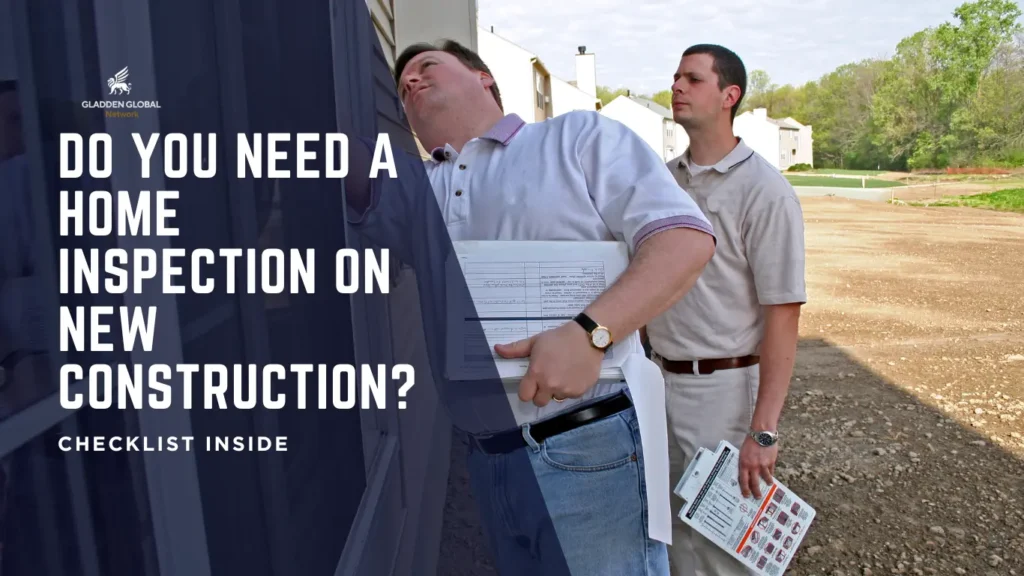
You found a brand new home. No one has lived in it. So do you really need a home inspection on new construction?
Yes. New does not mean perfect. Builders work fast and many crews share one job. Small mistakes happen, and many of them end up behind walls and under floors.
A new construction inspection gives you a clear list of what to fix before you close. This guide shows when to schedule it, what inspectors find, and what to check. Scroll down for our free new construction home inspection checklist.
Is a home inspection required for new construction?
Usually, no. Most buyers are not required to get one. But that does not mean you should skip it.
The city or county inspects the home for code. That is a good start, but it is not the same thing. Code inspectors check minimum safety rules in short visits. They do not work for you.
Your inspector works only for you. They check the whole home and tell you what they find in plain language.
Before you sign, read your contract. Some builders limit when outside inspectors can visit. Ask about this early and get your inspection rights in writing.
What does a new construction inspection find?
Common problems include:
- Grading that sends water toward the foundation
- Missing or loose insulation
- HVAC ducts that are disconnected or poorly sealed
- Plumbing leaks and loose fixtures
- Electrical issues, like loose wiring or missing covers
- Windows and doors that do not seal or close right
- Roof and flashing mistakes
- Cosmetic flaws in paint, trim, and flooring
Most are fixable. But only if someone finds them first.
When to schedule a home inspection for new construction
Do not wait until the end if you can help it. These are the three best times.
- Foundation stage. Before concrete is poured or covered. A new construction foundation inspection checks footings, reinforcement, and drainage. Problems here are the hardest and most costly to fix later.
- Pre drywall stage. After framing, wiring, plumbing, and ducts are in, but before walls are closed. This is your best look inside the walls.
- Final inspection. When the home is finished, before your final walkthrough and closing. This covers everything you can see and test.
Only want one? Pick the pre drywall stage. Want two? Add the final inspection.
New construction home inspection checklist
Use this list to know what a good inspection covers. Want a printable copy? Download the full checklist below.
Outside
- Grading slopes away from the home
- Gutters and downspouts are attached and drain well
- Siding, trim, and caulking have no gaps
- Driveway, walkways, and steps have no major cracks
Structure and roof
- No visible foundation cracks or settling
- Roof shingles are flat and secure
- Flashing is sealed around vents and chimneys
- Attic has proper insulation and ventilation
Inside
- Doors and windows open, close, and lock
- Floors are level and free of damage
- Walls and ceilings are free of cracks and stains
- Cabinets and counters are secure
Systems
- HVAC heats and cools every room
- Water pressure is good and there are no leaks
- Water heater is installed right
- Outlets, switches, and the panel work safely
- Smoke and carbon monoxide alarms are installed
Download the free new construction home inspection checklist
Final walkthrough vs. home inspection
A walkthrough is you and the builder’s rep checking the home. You note scratches, missing items, and visible issues.
An inspection is done by a trained professional. They test systems, check the structure, and know what to look for.
Do both. They work together.
How to find a new construction inspector near you
Search for a new construction inspection near you, but do not stop at the first result. Look for these:
- A license. Maryland licenses home inspectors, so ask for the license number and check it with the state.
- Experience with new builds, not just older homes.
- Membership in a group like the American Society of Home Inspectors or InterNACHI.
- A sample report, so you know what you will get.
- Willingness to inspect in phases.
Attend the inspection if you can. You will learn how your home works.
What to do with your inspection report
- Send the report to your builder in writing.
- Ask for a repair list with a timeline.
- Get confirmation that each item is fixed.
- Check the repairs at your final walkthrough or with a second inspection.
- Keep copies of everything for warranty claims later.
Do not close until the big items are resolved.
Buying new construction with a VA loan?
A VA appraisal is not a home inspection. The appraisal sets value. It does not check build quality. You still want your own inspector.
Using your benefit on a new build has its own rules. Read our guide: Can You Use a VA Loan for New Construction?
Buying new construction in Maryland?
We help buyers across Maryland, DC, and Virginia, from contract to closing and through the first year in the home. Looking at Shipley Homestead Townhomes in Hanover or Paddock Pointe in Laurel? We can help you plan your inspection stages before you sign.
Browse our new construction homes, see Shipley Homestead and Paddock Pointe, or read how builder incentives can help with closing costs.
Frequently asked questions
Yes, it is smart to get one. Code inspections cover minimum safety rules. A private inspector checks the full home for you.
Usually not. But your contract may limit access, so read it first and get your rights in writing.
Ideally in phases: at the foundation, before drywall, and at the final stage. If you can only do one, choose before drywall.
It depends on the size of the home and how many stages you book. Phased plans cost more than one final inspection. Ask local inspectors for quotes.
Some builders have access rules during construction. Ask before you sign. A good agent can help you negotiate this.
No. A warranty fixes problems after closing. An inspection finds them before you own the home. Many buyers do both, with a second inspection near the end of the first year.
Ready to buy new construction?
Thinking about a new build? Talk to the Gladden Global Network team. We are veteran owned and focused on protecting buyers at every step. Contact us today and we will help you plan your inspections before you sign